
Protecting cultural assets, optimizing energy consumption: QUANTUM ensures climate control in the museum
A municipal museum, library, planetarium and historical archives all under one roof: all these spaces require specific temperature conditions throughout the year. In Rennes, France, two QUANTUM Water chiller units from ENGIE Refrigeration provide cooling for the complex in line with the site’s requirements and form part of the building’s technical design.
Industry:
Technical building equipmentSolution:
QUANTUM chillers- Two QUANTUM chillers of type W0695 provide continuous cooling and heating for the building, delivering 588 kilowatts of cooling capacity and 755 kilowatts of heating capacity.
- A specified Energy Efficiency Ratio (EER), according to the product specification, is combined with a compact unit design.
Our customer had a clear requirement: reduce energy consumption without compromising operational reliability. Valuable exhibits, historical documents, and books require constant environmental conditions – failures are not an option. The QUANTUM Water chillers combine defined EER performance characteristics with a compact system design. The units feature established technology and are designed to support the operational requirements of climate control systems in museums and other cultural facilities. Another challenge was the very limited space in the existing machinery room. The compact design of the QUANTUM Water chillers allowed installation without structural extensions or extensive modifications.
ENGIE Solutions, a sister company of ENGIE Refrigeration and already responsible for building maintenance, facilitated the project. The long-standing relationship with the customer within the ENGIE Group, combined with the technical expertise of ENGIE Refrigeration, proved to be an ideal match.
Climate control in the museum: in operation all year round
While many cooling solutions operate seasonally or only in certain areas, the two QUANTUM chillers in Rennes must run continuously. They supply four different areas, each with specific requirements, and provide both cooling and heating:
The museum needs stable temperatures for sensitive exhibits; the archives protect historical documents from humidity and temperature fluctuations; the library preserves valuable temperature-sensitive book collections; and the planetarium requires precise climate control for its technical installations.
This versatility highlights the flexibility of the QUANTUM technology: a reliable solution for different applications that delivers high operational security throughout the entire year and helps building operators optimize energy consumption – whether for climate control in the museum or other cultural facilities.
Further references

Retrofit for water-cooled QUANTUM chillers at the airport
ENGIE Refrigeration is modernising two existing QUANTUM chillers at an airport in Bavaria as part of a retrofit project. The modernisation includes compressor replacement, a new control cabinet, an upgrade of the Siemens PLC and the conversion to the R-513A refrigerant. These measures update key system components without requiring structural alterations to the building or infrastructure.
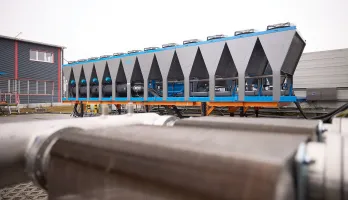
Cooling solutions for hospitals: QUANTUM Air is designed for hospital cooling applications and features performance characteristics defined in its technical specifications.
Is efficiency a priority? Then you need refrigeration solutions that deliver measurable results. A hospital in western France has therefore opted for the QUANTUM Air range from ENGIE Refrigeration. With a good Energy Efficiency Ratio (EER), the chiller effectively reduces energy consumption in the hospital.
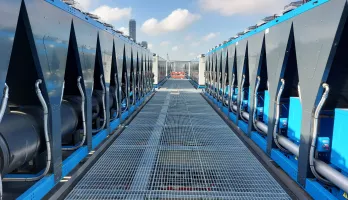
London: Efficient cooling with Active Harmonic Filter for building services
In one of London's most important business districts, four QUANTUM chillers delivered by ENGIE Refrigeration ensure a precise cooling supply. The project proves the flexibility of our building services solutions and strengthens our position in the British refrigeration market.

thermeco2 high-temperature heat pumps with cooling function shine in a government facility
In the public sector, two thermeco2 high-temperature heat pumps with cooling function are proving their worth in the energy-efficient provision of heating and cooling using CO₂ (R-744, GWP = 1) as refrigerant.
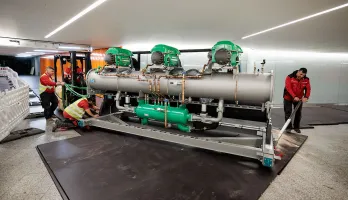
Successful installation of refrigeration technology at railway junction – with our QUANTUM chillers
A challenging cooling installation? High energy efficiency and safety requirements? Our team demonstrates that we can master these tasks with ease at a large German railway station building with the help of our QUANTUM chillers.
Cool performance in Korea: 28 QUANTUM Air units master air conditioning in data centre
ENGIE Refrigeration is providing IT cooling for a leading data centre operator in Korea with a powerful combination of QUANTUM Air chillers. This enables us to provide energy-efficient air conditioning for the data centre, using QUANTUM Air chillers with a high SCOP and low-GWP refrigerant R-1234ze.

COOLCARE 4.0 combines efficient plant monitoring and IT security in industry
We are equipping two QUANTUM Water systems with our cloud-based COOLCARE 4.0 service for the production facility of an international developer of instruments for eye diagnostics. By combining continuous system monitoring and remote maintenance, COOLCARE 4.0 supports the operation of our chillers on site by providing operational data and system information during operation.

ENGIE Refrigeration provides air conditioning for server rooms, battery rooms and offices on a data center campus
Sophisticated infrastructure in your data center? This is one of our areas of expertise. At a German data center campus, we provide reliable climate control for server rooms and other sensitive areas with our cooling and heating solutions.

Complete technical package with QUANTUM: Free cooling and waste heat utilization in a data center
Our team is producing the first QUANTUM Air units for a Dutch data center operator, enabling both waste heat utilization in the data center and free cooling of the chillers.
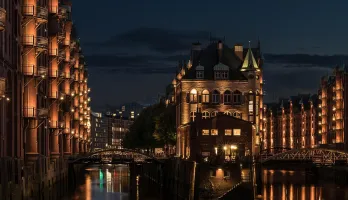
Alter Wall 40: A prime example of high-performance refrigeration technology in Hamburg
Efficient cooling of buildings: At Alter Wall 40, ENGIE Refrigeration is demonstrating how high-performance and reliable refrigeration technology works in Hamburg – and thus ensuring the quality of stay in the attractive mix of buildings.