Heat Recovery in the Food Industry: Technologies, Potential, and Funding Opportunities
Most food processing companies effectively pay for energy twice: once for cooling and once for heating. Yet the heat is already generated as a by-product of the cooling process and is often discharged unused every day. The largest untapped energy resource in food production facilities is not externally supplied renewable energy, but rather the waste heat already produced within the process itself. By systematically harnessing heat recovery, companies can reduce primary energy consumption and CO₂ emissions without compromising product quality or operational reliability.
What is heat recovery?
Heat recovery in cooling systems refers to the utilization of the condensation heat generated during the colling process for space heating, domestic hot water production, or industrial process heating. The cooling system and the heat sink are connected via heat exchangers or a heat pump to increase the overall energy efficiency of the system. Waste heat that would otherwise be discharged unused can replace fossil fuels and significantly reduce a facility’s energy consumption.
An overview of relevant technologies:
- Plate heat exchangers (recuperative, heat transfer efficiency up to 90%)
- Industrial heat pumps (annual performance factor (APF) 3.0–5.5)
- Recuperators for ventilation and drying applications
Refrigerants with lower global warming potential: NH₃ (ammonia, Global Warming Potential (GWP) = 0), CO₂ (GWP = 1), R290 propane (GWP = 3)
What methods of heat recovery are available?
Recuperative systems, regenerative systems and combined cycle concepts are the three main methods of heat recovery. The choice depends on the temperature level, the process structure and the available investment budget.
Recuperative vs. regenerative heat recovery
Recuperative heat recovery continuously transfers heat across a partition, typically in a plate heat exchanger. Heat exchange efficiencies of up to 90 per cent can be achieved under optimal operating conditions. Regenerative systems store heat in a thermal mass with a time delay and release it later; typical heat exchange efficiencies range between 60 and 85 per cent, depending on the configuration.
For continuous production processes with stable temperature levels, the recuperative variant is generally preferable. Regenerative systems are particularly suitable where the heat source and heat sink occur at different times, such as in batch processes in food production.
Integrated cycle systems in food production
A combined cycle system integrates a chiller, an industrial heat pump and a digital control system into a closed energy cycle. Food processing plants have a structural advantage here: cooling and heating requirements arise simultaneously during production, CIP (Cleaning in Place), pasteurisation and storage. This enables a particularly efficient system design. As a guideline, a heat recovery coefficient of over 60 per cent is typical for well-designed integrated systems; actual values depend on the temperature level, operating hours and system design.
Waste heat recovery using industrial heat pumps
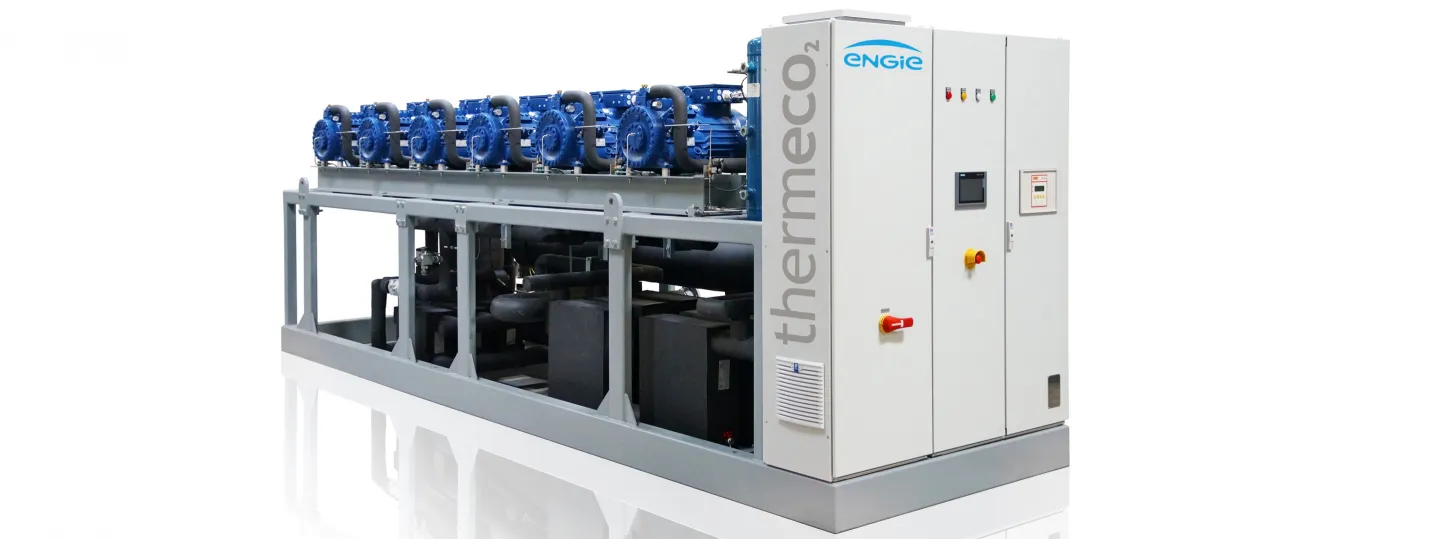
Industrial heat pumps raise waste heat to a usable temperature level. Modern high-temperature heat pumps based on thermeco₂ technology, using CO₂ in transcritical operation, achieve flow temperatures of up to 120 °C; in certain configurations, depending on the pressure stage and cascade configuration, temperatures of up to 150 °C can be achieved. This is sufficient for process steam, pasteurisation and demanding sterilisation processes.
The Coefficient of Performance (COP) depends largely on the temperature lift: with a lift of 20 Kelvin, COP values of 5–6 can be achieved; at 40 Kelvin, the COP drops to 4–5. A high COP alone is not a sufficient criterion for decision-making: if the TEWI value (Total Equivalent Warming Impact) is dominated by a high emission factor of the electricity mix, a system with a lower COP and electricity from renewable energies may perform better in terms of climate impact. Cascade configurations of several heat pumps may be more economically viable than a single, more powerful unit when higher temperature levels are required.
| System | Typical coefficient of performance / JAZ | Flow temperature | Typical applications |
|---|---|---|---|
| Plate heat exchanger | up to 90 % | 30 - 70 °C | Process heat, hot water |
| Recuperator | 60 - 85 % | 40 - 80 °C | Ventilation, drying |
| Industrial heat pump | JAZ 3.0 - 5.5 | up to 150 °C | Process steam, heating, sterilisation |
| MVR (Mechanical Vapour Recompression) | approx. 50 % energy saving compared to conventional systems | Dependent on steam pressure |
High-temperature processes > 150 °C |
Where does the food industry have the greatest potential for energy savings?
Die größten Einsparpotenziale liegen in der Kondensationswärme aus Kälteanlagen, der Abluft aus Trocknern und Blanchieranlagen sowie der Kompressorabwärme aus Druckluftanlagen. Gut ausgelegte Wärmerückgewinnungssysteme decken 20–50 % des betrieblichen Wärmeenergiebedarfs aus diesen Quellen.
Ungenutzte Abwärme als unterschätzter Effizienzhebel
The greatest energy-saving potential lies in the recovery of condensation heat from refrigeration systems, exhaust air from dryers and blanching plants, and waste heat from air compressors in compressed air systems. Well-designed heat recovery systems can cover 20% to 50% of a facility's thermal energy demand from these sources.
Unused waste heat as an underestimated driver of efficiency
Four factors are holding back the utilisation of waste heat: a lack of transparency regarding energy flows, insufficient system concepts, investment uncertainty, and the limited part-load capability of existing machinery. Air compressors, which are widely used in food processing facilities, release considerable amounts of heat. This compressor waste heat can be recovered with relatively little effort using heat exchangers and utilized for space heating or hot water generation.
The Food-Pinch research project at RWTH Aachen University, in collaboration with industry partners such as MAGGI Werk Singen, Nestlé Wagner and Stockmeyer, is developing dynamic heat integration for the food industry and, through demonstrators, is demonstrating potential savings in the range of around 15–25 per cent, and even higher in certain applications.
Which processes offer the greatest potential for savings?
Three levers, prioritised by impact:
- Consistent utilisation of waste heat: Condensation heat from cooling systems, exhaust air from dryers and blanching systems, and flue gas heat can all help to reduce fossil fuel consumption. Depending on the medium, temperature level and system design, high recovery rates are possible – and in some cases, very high values – though these cannot be achieved across the board for all applications.
- Smart integration of production processes: Closed-loop heat recovery systems with digital controls reduce energy waste by distributing recovered energy according to actual demand.
- Digital operational optimisation: Predictive maintenance (Smart Maintenance) and monitoring increase efficiency during operation and reduce unplanned downtime.
Optimizing individual components alone is not sufficient to achieve these levels of energy savings; system integration is a prerequisite.
Which technologies enable heat recovery?
Refrigerants, heat pumps and digital control systems form the technological foundation of heat recovery. It is their interaction that determines which savings potentials can actually be realised.
The refrigerants NH₃, CO₂ and hydrocarbons
The selection of refrigerants is made taking into account technical, safety-related and regulatory requirements. GWP and TEWI values can serve as evaluation criteria. Depending on the application, NH₃, CO₂, hydrocarbons or HFO refrigerants such as R-1234ze may be considered. l NH₃ has a GWP of 0, CO₂ a GWP of 1, R290 a GWP of 3 and R410A a GWP of 2.088. Due to the stricter EU F-gas regulations, refrigerants such as NH₃ and CO₂ are a future-proof choice for many new installations and significantly reduce regulatory risks.
The TEWI value also assesses indirect emissions resulting from the system’s electricity consumption, thereby providing a more holistic basis for assessment than the GWP value alone. As a transitional solution for applications where refrigerants cannot be used for safety reasons, HFO refrigerants such as R-1234ze (GWP < 1) offer a regulatory-compliant alternative.
It should be noted, however, that safety requirements in accordance with DIN EN 378-1 and installation conditions vary considerably depending on the refrigerant. R-290 (safety group A3) imposes high demands on leak detection and safety technology.
Digital control and smart monitoring as efficiency factors
Demand-based energy distribution during operation requires digital control strategies. Monitoring systems for leak detection are also a prerequisite for compliance with the F-Gas Regulation (EU) 2024/573. Buffer storage tanks balance out time-shifted fluctuations in waste heat generation and heat demand, for example in batch processes.
Applications: Where is heat recovery particularly worthwhile?
Operational reliability and redundancy of heat recovery systems
In food production, a failure in the cooling or heating supply leads directly to production losses. Well-designed heat recovery systems address this risk through built-in redundancy measures: isolatable heat exchanger modules allow maintenance to be carried out whilst the system is running, dual-pump technology ensures heat transfer even in the event of a pump failure, and automatic frost protection prevents damage at low outside temperatures.
Commercial cooling and supermarket cooling
In the food retail sector, CO₂ composite systems are the established standard for highly energy-efficient cooling technology. Well-designed systems utilise the heat of condensation directly for space heating and domestic hot water production, meaning no additional heating is required. CO₂ mini-boosters (typically for stores up to approx. 800 m²) and CO₂ micro-boosters (for small-scale shops under 400 m²) are compact system solutions with integrated heat recovery. VRV (Variable Refrigerant Volume) systems with integrated heat recovery enable simultaneous heating and cooling operation and reduce overall energy consumption compared with separate systems.
Waste heat as a source of revenue: district heating and absorption cooling
Waste heat from food processing plants and data centers (flow temperatures 25–45 °C) can be raised to a usable temperature using heat pumps and fed into district heating networks. In summer operation, absorption cooling offers a further application: waste heat drives the cooling process without consuming any additional electricity. Reference projects in Hamburg and Berlin (Federal Chancellery) demonstrate the practical viability of urban waste heat utilisation.
The heat exchange efficiency as a key planning parameter
The heat exchange or recovery efficiency of heat recovery systems describes the proportion of the theoretically available waste heat that is actually utilised. Under good operating conditions, modern systems can achieve heat recovery coefficients of over 90 per cent, although overall performance depends largely on the heat exchanger, control system and storage integration. When designing such systems, key performance indicators relating to the actual usable heat recovery should be taken into account alongside the COP and JAZ.
How cost-effective is heat recovery — and what financial support is available?
Potential savings and decision matrix by facility size
Industrial heat pumps achieve JAZ values of 3.0 to 5.5: 1 kWh of electricity generates up to 5.5 kWh of usable heat. Typical payback periods are 4–8 years for new installations and 2–5 years for retrofitting into existing systems, depending on energy prices and operating hours. The contracting model offers an investment alternative that requires no equity capital: the service provider takes care of installation, operation and financing, with the payback coming from savings on energy costs. Environmental, Social and Governance (ESG) and Corporate Social Responsibility (CSR) reporting requirements further increase the strategic pressure to invest, in addition to the cost argument.
| Technology | Plant size | Tempera-ture level | Investment budget | Recommended entry point |
|---|---|---|---|---|
| Plate heat exchanger (recuperative) | Small to medium | 30 - 70 °C | Low | Integration into existing systems, quick payback |
| Combined circuit system | Medium to large | 40 - 90 °C | Medium | New installation or comprehensive modernisation |
| Industrial heat pump (e. g. thermeco2) | Medium to large | 70 - 150 °C | Medium to high | Process steam, pasteurisation, sterilisation |
| CO2 mini/micro booster | Small (commer-cial) | 30 - 60 °C | Low to medium | Supermarket, small business with heat recovery |
| MVR (Mechanical Vapour Compression) | Large | > 150 °C | High | High-temperature processes, large-scale operations |
What government funding schemes are available — and which ones are suitable for which businesses?
For small and medium-sized food businesses integrating heat pumps or heat recovery systems into existing buildings, the BAFA / BEG EM (Federal Funding for Efficient Buildings, Individual Measures) is the most direct route. Large-scale operations with waste heat potential and a connection to a district heating network benefit more from the BEW (Federal Funding for Efficient District Heating Networks). Production facilities seeking to improve the efficiency of their process energy should consider the KfW 295 funding programme (Energy Efficiency in Production). Supplementary state programmes in Bavaria, North Rhine-Westphalia and Baden-Württemberg offer additional grants, particularly for industrial efficiency measures. Eligibility depends on the type of system, refrigerant, efficiency class and intended use; it is advisable to consult with funding advisers at an early stage before submitting an application.
Which regulatory requirements apply, and under what circumstances do they take effect?
The F-Gas Regulation (EU) 2024/573 tightens the phase-down for fluorinated greenhouse gases and, from 2025, prohibits the use of HFCs with a GWP > 150 in certain applications, including new supermarket cooling systems. Existing systems are not initially subject to an operating ban; however, maintenance and recharging are subject to stricter requirements. For operators with high energy consumption, the Energy Efficiency Act (EnEfG) also applies: from defined consumption thresholds onwards, there is an obligation to utilise waste heat, the implementation of which must be documented and verified.
| Regulatory framework | Scope | Deadline/Threshold | Action required |
|---|---|---|---|
| F-Gas Regulation (EU) 2024/573 | New systems using HFCs with a GWP > 150 |
From 2025 (new supermarket refrigeration systems) | Refrigerant change for new projects |
| Energy Efficiency Act (obligation to utilise waste heat) | Companies with final energy consumption of 2.5 GWh/year or more | Phased in from 2025 | Waste heat register, utilisation plan |
| DIN EN 378-1 | All refrigeration systems and heat pumps | Ongoing | Safety inspection, installation conditions |
| EU Ecodesign Directive | Chillers (SEPR-MT as a performance indicator) | Ongoing | Minimum efficiency classes for new purchases |
| ChemRRV (Switzerland) | Synthetic refrigerants | Stricter requirements from January 2025 | Refrigerant selection for sites in Switzerland |
| VDI 2071 | Heat recovery in ventilation and air-conditioning systems | Ongoing | Planning basis for ventilation systems |
PFAS regulation: An EU-wide restriction procedure for per- and polyfluoroalkyl substances (PFAS) is currently underway; synthetic refrigerants based on PFAS could be affected in the medium term.
How can heat recovery be integrated cost-effectively into existing buildings?
Integration into existing buildings requires a structured approach to minimise production downtime:
- Energy flow analysis: Measurement technology and monitoring provide transparency regarding existing cooling and heating requirements as well as waste heat sources, including compressor waste heat from compressed air systems.
- Identifying potential: Mapping waste heat sources and usable temperature levels; using dynamic pinch analysis for fluctuating process temperatures.
- System concept: Select the appropriate method (recuperative, heat pump, combined cycle) depending on the temperature level and operating profile.
- Phased integration: Prioritise measures that can be implemented whilst the system is in operation; plan for buffer storage to enable time-delayed utilisation of waste heat.
- Digital operational optimisation: Adapt control strategies, establish monitoring, and continuously improve efficiency.
Switching from steam to hot water supply (below 100 °C) can, as a preparatory measure, increase the COP of the downstream heat pump and simplify the system design.
Practical examples: What efficiency gains can be achieved?
Osatina Group (Croatia): Large-scale greenhouses were previously heated using gas. Several thermeco₂ high-temperature heat pumps with flow temperatures of up to 90 °C have completely replaced the fossil fuel-based heat supply. The decarbonisation of the production facility has thus been achieved under demanding process conditions. Project-specific operating figures, such as JAZ and kWh saved per year, are available on request from ENGIE Refrigeration.
Hybrid heating system: An existing plant with an inefficient heat supply was modernised by integrating cooling and heating into a hybrid system (capable of monovalent/bivalent operation, flow temperatures up to 90 °C). Modernising existing plants is proving to be an economically attractive entry route, with payback periods that can be significantly shorter than those for new installations. Challenges during integration related in particular to the HACCP-compliant separation of the circuits and the adaptation of the control technology to mixed operation.
Integrated system approach vs. individual solutions: what is the difference?
Pure equipment manufacturers supply components, whilst energy suppliers provide the energy. Neither the manufacturer nor the supplier assumes responsibility for the overall system or guarantees savings. ENGIE Refrigeration combines both: cooling technology, industrial heat pumps, heat recovery, electricity from renewable energies and financing are all provided from a single source, complemented by sector-specific expertise tailored to the food industry.
The contracting model transfers the installation, operation and financing entirely to ENGIE Refrigeration. Contractually guaranteed savings eliminate the investment risk for the operator; the investment is recouped from the energy cost savings. Smart Maintenance and continuous monitoring ensure efficiency during continuous operation.
Articles you might also be interested in
Data centers in transition: What role does ENGIE Refrigeration’s cooling portfolio play?
Year after year, Data Center World in Frankfurt showcases the direction in which the international data center market is heading. ENGIE Refrigeration is on site at the joint booth with ENGIE Germany, and Jürgen Martin, Key Account Manager for Data Centers at ENGIE Refrigeration, explains which technological trends are currently shaping the market – and how ENGIE Refrigeration’s product portfolio fits in with this – and why it is, of course, well worth visiting ENGIE Refrigeration at stand H102 in Frankfurt.

Large-scale heat pumps and the municipal heat transition: The role of heat pumps in urban heat supply
A large-scale heat pump is an industrial heat generation system with a thermal output typically ranging from several hundred kilowatts to the multi-megawatt scale. It extracts energy from environmental or waste heat sources and upgrades it to a usable temperature level. When deployed in district heating networks, it enables the decarbonization of heat supply for entire urban districts. Currently, around 70 percent of the heat supplied through German district heating networks still comes from fossil fuel sources, with natural gas and coal being the dominant energy carriers (according to Andreas Kuhn, Key Account Manager Industrial & Commercial Heating at ENGIE Refrigeration). Large-scale heat pumps can gradually reduce this share, helping municipalities achieve their climate targets.

Robust refrigeration technology for the navy, cruise ships and ferries: Ship ahoy with MARENUM!
Reliable and efficient chillers have long been part of the basic equipment of modern ships. However, special conditions apply on the water that differ from the usual requirements on land. Daniel Keller, Head of Sales & Business Development at ENGIE Refrigeration, explains what characterises refrigeration technology for the navy, cruise ships and ferries and what advantages our MARENUM chillers offer for various types of ships. He also provides exciting insights into three reference projects.

Trends in the IT sector: from sustainability requirements to edge data centres
Trends revitalise the IT sector. This is because they drive innovation, secure competitive advantages and enable long-term business success. As a cooling and heating expert for data centres and especially for edge data centres, ENGIE Refrigeration knows current trends inside out - and is even ahead of them thanks to future-oriented technologies. Jürgen Martin, Key Account Manager Data Centres at ENGIE Refrigeration, shares his expert assessment of the most important market developments in the data centre sector in 2025.

Large heat pumps as a key technology for reducing fossil fuel dependency in heat supply
Why are large-scale heat pumps a key technology for the decarbonisation of heat supply and what challenges and opportunities are there for their implementation? Jörn Stiegelmeier, CTO of ENGIE Refrigeration, answers these questions in an interview.
Tailor-made solution for data centres: 16 water-cooled QUANTUM chillers in a container ensure whisper-quiet operation and energy-efficiency
16-fold chiller power in the Netherlands: ENGIE Refrigeration proves that operational reliability and high-end technology in data centres work best with water-cooled chillers for a large, internationally active provider in the field of large data centres: 16 QUANTUM Water models in a GENIUM container promise outstanding efficiency and whisper-quiet operation. Jürgen Martin, Key Account Manager Data Centre at ENGIE Refrigeration, reveals exciting details about the project

Mastering the F-Gas Regulation with ENGIE Refrigeration: Low-GWP Refrigerants and Compliance Strategies for Chillers and Heat Pumps
By 2030, the European Union aims to reduce emissions of fluorinated greenhouse gases by 70 million tonnes of CO2 equivalent to 35 million tonnes of CO2 equivalent compared to 1990. The F-Gas Regulation makes a key contribution to this by incentivising the use of alternative refrigerants and requiring those responsible to develop new strategies for the cooling and heating supply of tomorrow. Jörn Stiegelmeier, Head of Technology and Development at ENGIE Refrigeration, knows the legal situation very well, not least through his association work at the Bundesindustrieverband Technische Gebäudeausrüstung e. V. (BTGA), and points out future-proof perspectives.
Customised rental cooling: QUANTUM air chillers offer flexible, low-refrigerant-charge performance for major radio and television broadcaster
Customisable and adaptable to a range of application requirements: rental chillers can be used to provide temporary cooling capacity in a wide range of applications. In the studios of a public broadcaster in Germany, ENGIE Refrigeration proves how precisely rental refrigeration can be integrated into existing environments, even under demanding conditions. Hans-Werner Barkhofen, Head of Service Germany West at ENGIE Refrigeration, talks in an interview about the challenges and opportunities of rentable refrigeration solutions.

Heat recovery with the QUANTUM chiller: reducing primary energy consumption by reusing process waste heat
The energy and heat transition are considered to be the central challenges of our time. The use of waste heat offers tangible opportunities for numerous industries in the transition to climate neutrality. With the QUANTUM chiller with optional heat recovery (Green Heat Recovery), ENGIE Refrigeration shows environmentally friendly and economic perspectives for the reuse of heat from refrigeration processes.
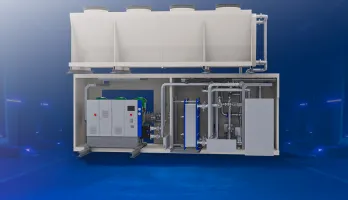
Ten in one: QUANTUM chiller and SPECTRUM heat pump provide pioneering momentum for data centres
Digitalisation is one of the economic megatrends of our age. Most businesses are reliant on smooth-running information technology (IT) – and thus on data centres, the IT all-rounder. How can a sensitive digital infrastructure be operated as safely, reliably and energy-efficiently as possible? With its QUANTUM chiller and SPECTRUM heat pump, ENGIE Refrigeration now takes care of ten local data centres belonging to a German provider – and is breaking new ground for the IT industry in the process.