
Large-scale heat pumps and the municipal heat transition: How cities are decarbonising their heat supply
A large-scale heat pump is an industrial heat generation system with a thermal output typically ranging from several hundred kilowatts to the multi-megawatt scale. It extracts energy from environmental or waste heat sources and upgrades it to a usable temperature level. When deployed in district heating networks, it enables the decarbonization of heat supply for entire urban districts. Currently, around 70 percent of the heat supplied through German district heating networks still comes from fossil fuel sources, with natural gas and coal being the dominant energy carriers (according to Andreas Kuhn, Key Account Manager Industrial & Commercial Heating at ENGIE Refrigeration). Large-scale heat pumps can gradually reduce this share, helping municipalities achieve their climate targets.
Why do district heating networks urgently need to be transformed?
Heating networks form the backbone of urban heat supply — yet their dependance on fossil fuels remains high. The buildings sector accounts for around 35 per cent of total final energy consumption in Germany, yet only 20 per cent of this is covered by renewable energy sources. The Heat Planning Act 2024 stipulates that a heat plan must be drawn up by 30 June 2026 at the latest for all municipal areas with more than 100,000 inhabitants (as at 1 January 2024). The federal states may subsequently delegate this obligation to municipalities or other planning authorities through state legislation. In practice, this means that cities and municipalities are required to carry out—or commission—heat planning, creating a regulatory framework that is now compelling municipal utilities and energy planners to take action.
District heating networks offer decisive advantages over decentralised supply:
- Balancing local energy surpluses and demand
- Integration of large-scale renewable heat sources
- The possibility of seasonal heat storage
- No need for consumers to operate their own heating systems
- Scalability for densely populated areas
According to a study by the Fraunhofer Institute for Energy Economics and Energy System Technology (IEE), the share of final energy supplied by district heating networks must rise from 10–15 per cent to around 35 per cent by 2030 in order to meet climate targets. Large-scale heat pumps play a central role in this.
What heat sources can a large-scale heat pump utilise?
Large-scale heat pumps tap into a wide range of heat sources — including many that are technically and economically inaccessible to decentralised individual systems. As the Federal Ministry for Economic Affairs and Energy explains, large-scale heat pumps can convert river and lake water, waste water, industrial waste heat, geothermal energy and ambient air into climate-neutral heat.
The following matrix evaluates heat sources according to planning-relevant criteria:
| Heat source | Availability | Tempera-ture level | Permit requirements | Development costs | Suitability of existing network |
|---|---|---|---|---|---|
| River water | High (seasonal) | 5 - 20 °C | medium | low (infrastructure often in place) | limited |
| Wastewater heat | constant | 10 - 20 °C | low | low - medium | good |
| geothermal energy | very constant | 10 - 30 °C | high | high | good |
| Industrial waste heat | depends on location | 20 - 60 °C | low | low | very good |
| ground water | constant | 8 - 12 °C | high (water act) | medium | good |
The choice of heat source has a significant impact on system efficiency, investment costs, and permitting requirements. River-water heat pumps are particularly attractive when existing infrastructure can be utilized, helping to reduce both capital expenditure and project implementation efforts — as demonstrated by the BMWE using the example of the river heat pump on the Rhine, which is calculated to supply around 3,500 households. As enercity explains, cascading several large heat pumps can result in systems in the two- to three-digit megawatt range — a scaling advantage that decentralised systems do not offer.
Of particular interest to municipal utilities and local authorities, waste heat from data centers is becoming an increasingly important heat source — including for municipal buildings and facilities. The available temperature level typically ranges between 20°C and 40°C, making it well suited for integration into a large-scale heat pump system connected to a downstream district heating network.
How much does a large-scale heat pump cost — and what subsidies are available?
The investment costs depend heavily on the capacity, heat source and system integration. Depending on the configuration, systems in the range of 350 kW to 3 MW typically cost between several hundred thousand and several million euros. As the German Heat Pump Association (BWP) explains, from around 2 MW upwards, all large-scale heat pumps are custom-built — and costs vary considerably as a result.
The Federal Funding Scheme for Efficient Heating Networks (BEW) offers attractive support:
- Investment grant: up to 40 per cent of eligible costs
- Operating cost funding for large heat pumps — a component that is often underestimated in planning practice
- Applications are submitted via the BAFA
Potential economic advantages over gas-fired CHP:
- No CO₂ levy on heat output when using renewable electricity
- Annual performance factor (JAZ/COP) typically 3–5; according to Thermondo, this corresponds to an efficiency of 300 to 500 per cent
- Long-term independence from gas price fluctuations
An individual cost-benefit analysis is recommended, as electricity prices, the heat source and operating hours have a significant impact on the payback period. Anyone wishing to take advantage of the BEW operating cost subsidy should ensure that the system design meets the eligibility criteria at an early stage — subsequent adjustments are often time-consuming.
When is a large-scale heat pump the right choice?
The decision to opt for a large-scale heat pump can be systematically assessed using five parameters:
Step 1 — Heat demand: Is the demand below 200 kW? → Consider a decentralised heat pump instead. From 200 kW upwards, a large-scale heat pump generally makes sense.
Step 2 — District heating network: Is a district heating network in place or under development? → Yes: proceed to Step 3. No: clarify whether network planning is a prerequisite.
Step 3 — Heat source: Can a suitable heat source be tapped within a reasonable distance? → Yes: proceed to Step 4. No: consider an air-to-water variant or a hybrid solution (assess technical and economic feasibility on a case-by-case basis).
Step 4 — Flow temperature: Is the required flow temperature above 75 °C? → Plan for a high-temperature heat pump (e.g. thermeco2 up to 90 °C).
Step 5 — Funding: Is a BEW grant application planned? → Tailor the system design to ensure eligibility for funding at an early stage.
Less suitable if:
- there is no district heating network and no expansion is planned
- there is no suitable heat source within reach
- the heat demand is significantly below 200 kW
Within a district heating network, a large-scale heat pump can be operated in monovalent or multivalent mode as part of an integrated CHP solution. According to Bosch, if it is also connected to the electricity grid and operated to support the grid, this helps to make the electricity grid more flexible and stable – a key aspect of sector coupling.
What role do large-scale heat pumps play in the decarbonisation of heating networks?
“At present, district heating networks are still predominantly supplied by fossil fuels. ‘Around 70 percent of the corresponding energy supply still comes from natural gas and coal today,’ explains Andreas Kuhn, Key Account Manager for Industrial & Commercial Heating at ENGIE Refrigeration. ‘Large heat pumps play a pivotal role in this regard.’
When large-scale heat pumps are operated in a grid-friendly manner, they gain in importance as a flexibility component for the electricity sector. If renewable energies temporarily generate more electricity than is consumed, this surplus electricity can be fed into the district heating network as heat via large-scale heat pumps – thereby specifically linking the electricity and heating sectors in line with the principle of sector coupling. The Fraunhofer Institute for Energy Infrastructures and Geotechnologies (IEG) and Agora Energiewende estimate that up to 70 per cent of the heat in German district heating networks could come from large-scale heat pumps in future. This flexibility advantage can be further enhanced by integrating heat storage systems.
Practical examples: Large-scale heat pumps in municipal projects
Bordeaux, France: In a new residential development covering 40,000 square metres, a SPECTRUM Water heat pump with a thermal output of one megawatt is providing the heating supply. The system utilises renewable heat sources with a source temperature of approximately 12 °C.
Braunschweig, Germany: In the ‘Heinrich der Löwe’ urban district, comprising 600 residential units, BS Energy is using a thermeco2 high-temperature heat pump. This EU-funded pilot project demonstrates the efficient utilisation of waste heat in an existing urban neighbourhood and delivers flow temperatures of up to 90 °C — a figure that conventional heat pumps cannot achieve.
Ludwigsburg, Germany: The Ludwigsburg District Office is using a thermeco2 heat pump to perform heat recovery from its in-house data center. The waste heat from the data center is harnessed as a heat source — an example of the economical use of industrial waste heat in municipal properties.
Solutions for municipal heating networks
For cities and local authorities wishing to integrate a large-scale heat pump into their heating network, ENGIE Refrigeration offers two product ranges.
SPECTRUM Water is available in twelve basic models with a nominal heating capacity ranging from 350 to 3,100 kW. The system is characterized by cooling medium outlet temperatures of up to 65°C, an oil-free machine design with magnetically levitated turbo compressors, and an optional smart grid interface for grid-supportive operation.
thermeco2 is the high-temperature heat pump for flow temperatures of up to 90 °C — using the natural refrigerant CO₂. Available in capacity ranges from 90 to 1,000 kW, it is particularly suitable for existing networks with high temperature requirements and for waste heat utilisation schemes in neighbourhoods and municipalities.
The transformation of the heating supply requires careful planning — from heat source analysis and system design to a strategy for securing subsidies. Our experts support cities, local authorities and energy suppliers at every stage of this process.
Find the right solution for your project with our experts now
Author profile

Andreas Kuhn has in-depth market knowledge of the DACH region and many years’ experience in the chemical and food industries, as well as in industrial cooling, with a particular focus on ammonia-based products. He also brings extensive expertise in the planning and implementation of complex projects, gained through roles at leading companies in the refrigeration, air-conditioning and heating sectors, where he has, for example, implemented ammonia refrigeration systems in Mexico and innovative heat pump solutions in Germany. For many years now, this refrigeration and heating expert has been actively involved in the German Heat Pump Association (BWP) in the field of sustainable energy solutions.
Would you like to engage in a professional exchange with Andreas Kuhn? Get in touch directly.
Frequently asked questions about large-scale heat pumps
What is a large-scale heat pump?
A large-scale heat pump is an industrial heat generation system with a heat output typically ranging from several hundred kilowatts up to the megawatt range. It utilises the physical principle of the heat pump process to raise energy from environmental or waste heat sources to a usable temperature level. Unlike domestic heat pumps, large-scale heat pumps are designed to feed into district heating networks and supply entire neighbourhoods. They are regarded as a key technology for the decarbonisation of district heating.
How much does a large heat pump cost?
The investment costs depend heavily on the capacity, heat source and system integration. Systems in the 350 kW to 3 MW range typically cost between several hundred thousand and several million euros. Through the BEW, investment grants of up to 40 per cent of eligible costs can be applied for. An individual cost-benefit analysis is recommended, as electricity prices, the heat source and operating hours have a significant impact on the payback period.
How many kW does the largest heat pump have?
The most powerful large-scale heat pumps worldwide achieve heat outputs of several hundred megawatts. In Europe, systems with capacities of 50 to 200 MW are in use in district heating networks, for example in Scandinavia. In Germany, projects in the double-digit megawatt range are currently being implemented. The SPECTRUM Water is available in basic models up to 3,100 kW; significantly higher total outputs can be achieved by cascading several units.
What is the biggest problem with a heat pump?
The most common challenges with large-scale heat pumps in district heating networks are the availability of suitable heat sources, high flow temperatures in older existing networks (often > 80 °C), water law permits, the planning and the approval process. Many of these hurdles can be addressed through early-stage system planning and BEW funding. High-temperature heat pumps such as the thermeco2 solve the temperature level problem for existing networks.
Which heat sources are suitable for large-scale heat pumps in district heating networks?
Large-scale heat pumps can use river water, lake water, ground water, waste water heat, industrial waste heat and geothermal energy. Wastewater heat is readily available in urban areas and maintains a stable temperature. Industrial waste heat from data centers or cooling systems can be used efficiently. Geothermal energy offers very consistent source temperatures but requires site-specific development. The choice of heat source has a significant impact on system efficiency, investment costs and the regulatory approval process.
Articles you might also be interested in
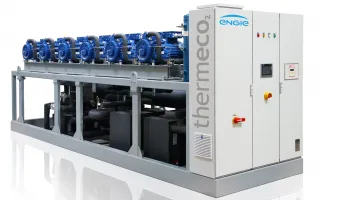
Heat Recovery in the Food Industry: Technologies, Potential, and Funding Opportunities
Most food processing companies effectively pay for energy twice: once for cooling and once for heating. Yet the heat is already generated as a by-product of the cooling process and is often discharged unused every day. The largest untapped energy resource in food production facilities is not externally supplied renewable energy, but rather the waste heat already produced within the process itself. By systematically harnessing heat recovery, companies can reduce primary energy consumption and CO₂ emissions without compromising product quality or operational reliability.

Large heat pumps as a key technology for a climate-neutral future
Why are large-scale heat pumps a key technology for a climate-neutral future and what challenges and opportunities are there for their implementation? Jörn Stiegelmeier, CTO of ENGIE Refrigeration, answers these questions in an interview.

Refrigerants with a future: Mastering the F-Gas Regulation sustainably thanks to ENGIE Refrigeration
By 2030, the European Union aims to reduce emissions of fluorinated greenhouse gases by 70 million tonnes of CO2 equivalent to 35 million tonnes of CO2 equivalent compared to 1990. The F-Gas Regulation makes a key contribution to this by incentivising the use of alternative refrigerants and requiring those responsible to develop new strategies for the cooling and heating supply of tomorrow. Jörn Stiegelmeier, Head of Technology and Development at ENGIE Refrigeration, knows the legal situation very well, not least through his association work at the Bundesindustrieverband Technische Gebäudeausrüstung e. V. (BTGA), and points out future-proof perspectives.

How energy-efficient milk processing succeeds with our high-temperature heat pump – a solution that convinces with quality and measurable efficiency gains
The dairy industry is both energy-intensive and particularly demanding when it comes to cooling and heating. A solution that convinces with quality, efficiency and climate friendliness is therefore essential. How ENGIE Refrigeration manages this task for a specialist in drying and evaporating technology with a thermeco2 high-temperature heat pump and ensures sustainable dairy production in the process, Daniel Keller, Director Sales & Business Development, reveals in an interview.

Heat recovery with the QUANTUM chiller: reducing primary energy consumption by reusing process waste heat
The energy and heat transition are considered to be the central challenges of our time. The use of waste heat offers tangible opportunities for numerous industries in the transition to climate neutrality. With the QUANTUM chiller with optional heat recovery (Green Heat Recovery), ENGIE Refrigeration shows environmentally friendly and economic perspectives for the reuse of heat from refrigeration processes.
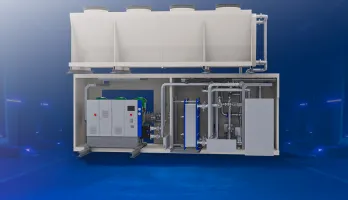
Ten in one: QUANTUM chiller and SPECTRUM heat pump provide pioneering momentum for data centres
Digitisation is one of the economic megatrends of our age. Most businesses are reliant on smooth-running information technology (IT) – and thus on data centres, the IT all-rounder. But how can a sensitive digital infrastructure be operated as safely, efficiently and sustainably as possible? With its QUANTUM chiller and SPECTRUM heat pump, ENGIE Refrigeration now takes care of ten local data centres belonging to a German provider – and is breaking new ground for the IT industry in the process.

Mission: the future mastering the urban and municipal heating transition with a large heat pump
The heating transition starts in buildings. This means that cities and municipalities, with their large number of buildings, play a crucial role in significantly reducing greenhouse gas emissions in the heating sector. What’s the best way to structure the energy and heating transition as soon as possible and as successfully as possible? Large heat pumps such as the SPECTRUM Water and thermeco2 can make an important contribution to this endeavour.
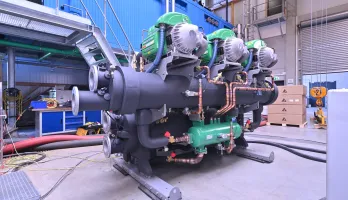
SPECTRUM Water heat pump in a complex near Bordeaux
Heat pump instead of gas: A SPECTRUM Water unit from ENGIE Refrigeration is set to be installed in a modern property complex near the Bordeaux metropolitan area in France. In this interview, Product Manager Marcel Kulk explains the project’s requirements and highlights which features of the heat pump are relevant for this application.
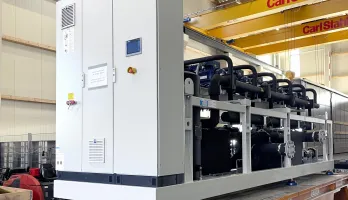
How thermeco2 high-temperature heat pumps replace fossil heating in food production – reducing CO₂ emissions through heat pump technology
Food production is one of the most sensitive industries. In this sector, heating supply requirements are particularly exacting. What reliable solutions does ENGIE Refrigeration provide to meet these requirements? The expert Rosa Gutarz, Head of Product Management at ENGIE Refrigeration, explains using the Osatina Group as an example.
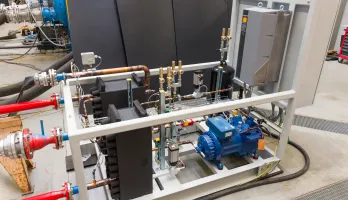
thermeco2 heat pump in operation: Green technology cools data centre
How can data centres become more green? Ludwigsburg District Office asked itself that very question in relation to its in-house data centre. It found its answer with ENGIE Refrigeration. A machine type HHR 130 thermeco2 high-temperature heat pump with refrigeration now provides sustainable server cooling on site.