
Process heating and cooling supply in milk production
When milk production relies on heat-cold coupling with low-GWP refrigerants and high energy efficiency – then the cooling and heating solutions from ENGIE Refrigeration are certainly in play.
-
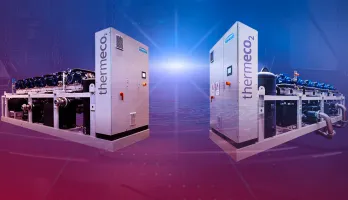
Seven redundant thermeco2 high-temperature heat pumps, each with six compressors, contribute to the successful milk production of the northern German dairy by providing efficient process heating and cooling.
-
The systems achieve hot water flow temperatures of up to 125 °C in a single-stage cooling circuit. This is a new record in the industry.
Our cooling and heating experts have set a new record at a large dairy in northern Germany. Due to a spray dryer for the production of milk powder, the dairy has a high demand for process heat during milk production. The spray drying process also works thanks to the precise supply of cold air flows. When it comes to the reliable provision of process heating and cooling, ENGIE Refrigeration is always at the forefront: our team of experts provides seven redundant thermeco2 high-temperature heat pumps, each with six compressors, for the cooling and heating of the spray tower and thus for milk production. In order to achieve the temperature spread of 125 Kelvin between the cold water and hot water temperatures required for milk production, our specialists also installed controlled heat exchangers. The thermeco2 not only copes with the high demand for process heating and cooling without any problems, it also runs particularly efficiently thanks to combined cooling and heating. Our team ensured this beforehand on our own test bench.
The milk production of tomorrow
And it gets even better: in this dairy production project, our cooling and heating specialists set a new record in the industry. By making technical adjustments, they increased the hot water flow temperatures to up to 125 °C in a single-stage cooling circuit. They also succeeded in improving the coefficient of performance of the high-temperature heat pump with two independent hot water circuits. Thanks to CO₂ (R-744) as a refrigerant – with a global warming potential (GWP) of 1, far below that of conventional fluorinated refrigerants – the solution avoids high-GWP greenhouse gas emissions in process heating and cooling supply. The pleasing consequence: by switching to climate-neutral energy sources, primary energy consumption is reduced by 41 percent compared to a standard spray tower without a high-temperature heat pump. This corresponds to 6,000 tons of CO2 and 8,000 operating hours per year with an emission factor of 0.05 kilograms of CO2 per kilowatt hour of electrical energy. This reduces primary energy consumption by 41 percent and avoids high-GWP refrigerants – for efficient, future-proof milk production - and a reliable supply of process heating and cooling.
Further references
Energy-efficient data centre: CO₂ high-temperature heat pumps make intelligent use of waste heat
To realise a future-oriented, high‑performance data centre, ENGIE Refrigeration – in collaboration with ENGIE Deutschland – is implementing an innovative waste‑heat utilisation concept featuring eight thermeco2 high‑temperature heat pumps. This customised solution enhances overall energy efficiency through intelligent waste heat utilisation and ensures a reliable heat supply for the entire campus – making it a key element in the energy-efficient operation of the data centre.
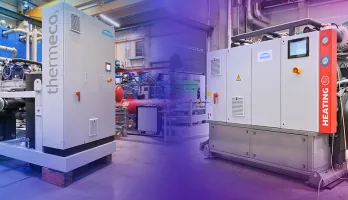
Heat recovery using heat pumps: Manufacturer of electrical installations implements a heat recovery concept in its production environment
A leading manufacturer of electrical installations in residential, industrial and commercial properties is actively driving forward the energy transition: with industrial heat pumps from ENGIE Refrigeration, the company uses waste heat from the chillers for heating. The tailor-made concept shows how heat recovery with heat pumps reduces fossil fuel consumption for heating – replacing conventional heat generation with waste heat from the existing chillers.

thermeco2 high-temperature heat pumps with cooling function shine in a government facility
In the public sector, two thermeco2 high-temperature heat pumps with cooling function are proving their worth in the energy-efficient provision of heating and cooling using CO₂ (R-744, GWP = 1) as refrigerant.

Innovative heat recovery in a leisure pool: efficient solution from ENGIE Refrigeration
A leisure pool in North Rhine-Westphalia has opted for an innovative solution for heating its swimming pools and shower water. The project was realised in collaboration with a planning office and a general contractor.
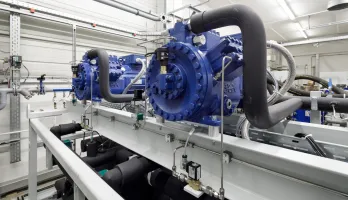
Pilot project for waste heat recovery
Two companies, one common goal: ENGIE Refrigeration is supporting BS|ENERGY in Braunschweig with the implementation of a new heating solution based on waste heat recovery. A reference project for the practical application of heat recovery technology.
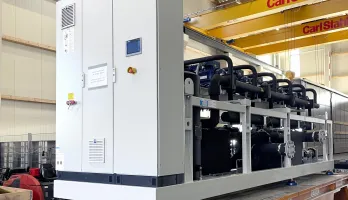
Energy-efficient greenhouse heating with the thermeco2 high-temperature heat pump
Heating your greenhouse in a future-proof way is in the interest of many operators. A specialty of ENGIE Refrigeration: At the Osatina Group, a leading food manufacturer from Croatia, ten thermeco2 high-temperature heat pumps provide an energy-efficient heat supply using CO₂ as a refrigerant (GWP = 1) in five greenhouses.

Precise supply: High-temperature heat pump in chocolate production
A thermeco2 high-temperature heat pump (type: HHR 360) ensures the ideal temperatures in chocolate production at Riegelein in Cadolzburg.